How Real-Time AI Is Reshaping Live Production
Live production events, from concerts and sports broadcasts to corporate conferences and hybrid streaming shows, have always demanded split-second decisions and flawless execution. Today, real-time artificial intelligence is stepping into the control room, changing how directors, engineers, and producers manage complexity on the fly. The result is smarter workflows, fewer human errors, and experiences that feel more polished than ever before.
The integration of AI into live production is not a distant promise. It is happening right now, across venues and broadcast facilities around the world, and the professionals who understand it early are gaining a significant competitive edge.
What Real-Time AI Actually Does During a Live Event
At its core, real-time AI processes incoming data streams and delivers actionable outputs fast enough to influence what happens on screen or on stage. This includes video, audio, sensor data, and even social media signals, all analyzed and acted upon in milliseconds.
Automated Camera Switching and Framing
One of the most visible applications is intelligent camera control. AI systems can track subjects across multiple camera feeds, predict movement, and trigger cuts or zooms without a human director issuing every command. For large events with dozens of cameras, this dramatically reduces the burden on the production team and ensures that the best shot is always captured.
AI-Powered Audio Management
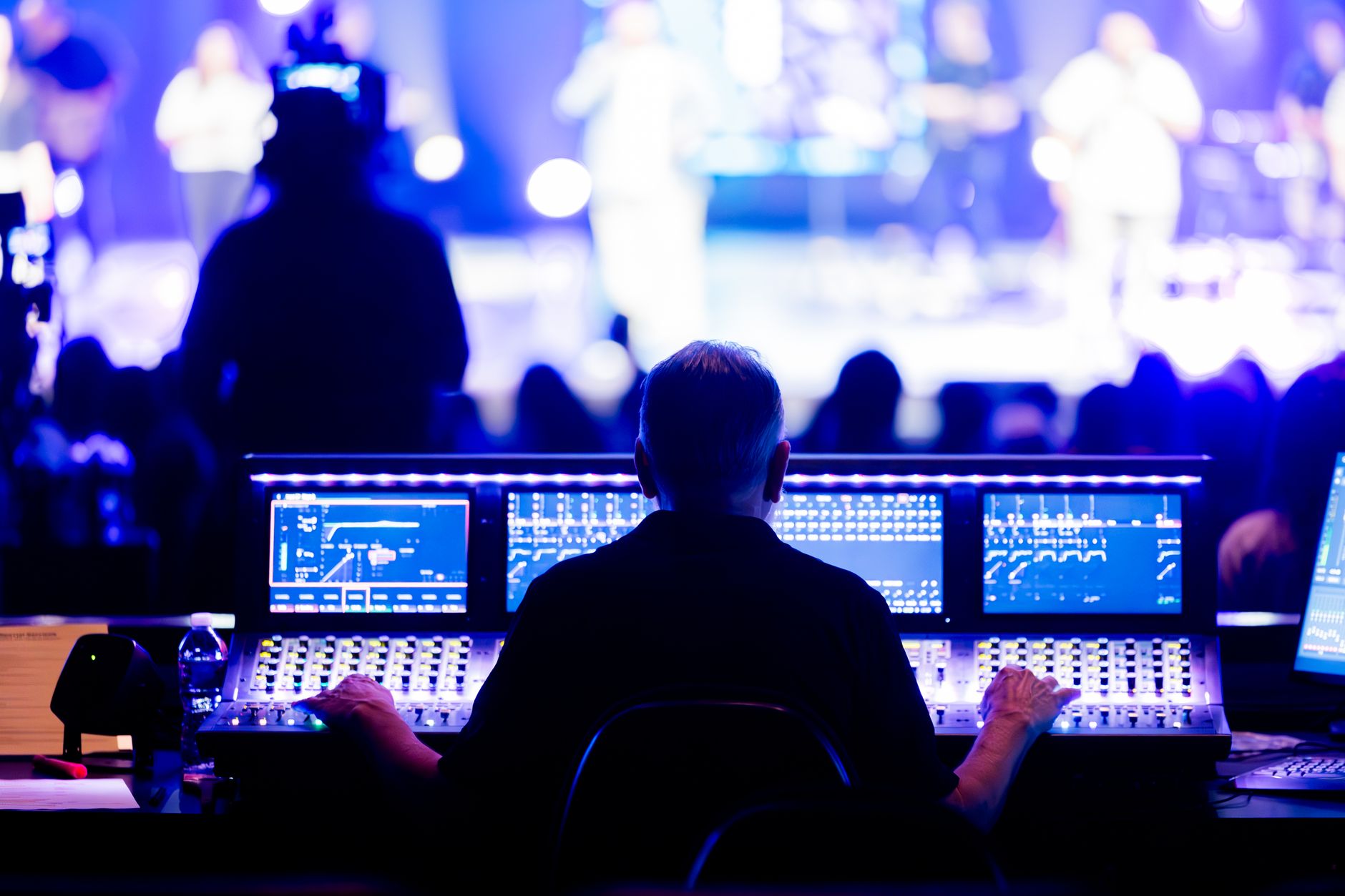
Sound engineers have traditionally spent years developing the instincts needed to balance a live mix in real time. AI-assisted audio tools now monitor dozens of microphone inputs simultaneously, detect feedback before it becomes a problem, suppress background noise dynamically, and even adjust EQ profiles based on venue acoustics. The human engineer remains in control, but with far greater precision and support.
Live Graphics and Captioning
Real-time AI also powers on-screen graphics generation, automated scoreboard updates, live closed captioning, and instant translation overlays. For corporate events and international broadcasts, these tools are no longer optional luxuries. They are baseline expectations from audiences who demand accessibility and immediacy.
Practical Applications Across Event Types
The range of events benefiting from real-time AI is broad and growing. Each context brings its own demands, and AI adapts accordingly.
Sports and Entertainment Broadcasts
Major sporting events now use AI to generate instant replays, highlight packages, and predictive graphics that show statistics in context. Broadcasters can deliver richer storytelling without expanding their crew, keeping productions lean while raising production value.
Corporate and Hybrid Events
For corporate conferences that blend in-person and remote audiences, AI tools manage stream quality adaptively, switch between speakers automatically, and generate real-time transcripts for post-event documentation. These capabilities make hybrid events feel seamless rather than stitched together.
Concerts and Festival Productions
In music and entertainment, AI is being used to synchronize lighting, video walls, and pyrotechnics with live audio signals, creating immersive environments that respond to the performance in real time. The coordination that once required large teams of operators can now be partially automated, freeing creatives to focus on artistry.
Challenges and Considerations
Adopting real-time AI in live production is not without its challenges. Latency remains a critical concern, since any delay between input and output can break the synchronization that live events depend on. Reliable infrastructure, low-latency networking, and carefully tuned systems are essential prerequisites.
There is also the matter of trust. Experienced production professionals are rightfully cautious about handing control to automated systems in high-stakes environments. The most successful implementations position AI as an assistant rather than a replacement, augmenting human judgment rather than overriding it.
Data privacy and rights management add further complexity, particularly when AI systems are trained on proprietary content or handle audience data in real time.
How Professional Services Support AI-Driven Productions
Bringing real-time AI into a live production pipeline requires more than purchasing the right software. It demands expertise across live production workflows, robust IT infrastructure, and often custom integration work to connect AI tools with existing equipment and software ecosystems.
This is where multidisciplinary service providers become essential. The team at nark.ro works at the intersection of live production, IT infrastructure, and AI automation, offering the kind of end-to-end support that complex productions require. Whether the need is integrating an AI camera system, configuring low-latency streaming infrastructure, or building custom automation scripts that connect disparate production tools, having a partner who understands all layers of the stack makes implementation far more reliable.
The Road Ahead for AI in Live Events
Real-time AI in live production is evolving rapidly. Edge computing is pushing processing power closer to the source, reducing latency further. Multimodal AI models are beginning to understand context across video, audio, and text simultaneously, opening the door to even more intelligent production assistants.
For event producers, broadcasters, and production companies, the question is no longer whether to adopt AI-driven tools, but how to do so thoughtfully and effectively. Those who invest in understanding these technologies now, and partner with experienced teams to implement them well, will define the standard for live experiences in the years to come.